
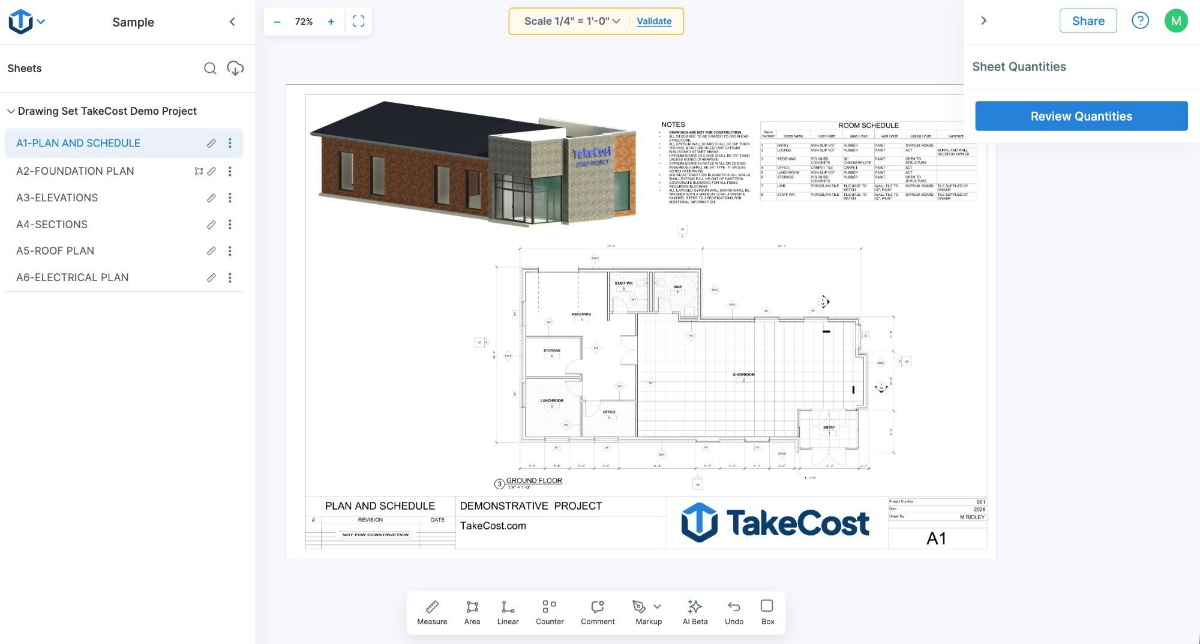

A construction takeoff is the process of measuring quantities from drawings before pricing begins.
It determines how much material, labour, and work is required for a project.
Accurate takeoffs are the foundation of accurate estimates. If quantities are wrong, every number that follows will be wrong.
This guide explains how to perform a construction takeoff step by step, from reviewing drawings to organizing quantities for pricing.
Step 1: Review the Drawings and Scope
Before measuring anything, review the full drawing set.
Look for:
- Architectural drawings
- Structural drawings
- Detail sheets
- Specifications
- Notes and general conditions
Understand what is included and what is not.
A takeoff starts with clarity on scope. Measuring without understanding the project leads to missed items.
If you’re new to the concept of takeoffs, start here:
👉 What Is a Construction Takeoff
Step 2: Identify the Items to Measure
Next, break the project into measurable components.
This may include:
- Square footage
- Linear footage
- Counts of units
- Areas
- Volumes
Each trade will measure different items, but the goal is the same: translate drawings into quantities. Clear categorization now prevents confusion later.
Step 3: Set Scale and Confirm Accuracy
Before measuring, confirm drawing scale.
Incorrect scale settings can distort every quantity in the takeoff.
Double-check:
- Scale dimensions
- Units of measurement
- Consistency across sheets
Small scale errors can compound into large quantity discrepancies.
Step 4: Measure Quantities Systematically
Measure methodically.
Work sheet by sheet or section by section.
Common best practices include:
- Highlighting completed areas
- Using consistent naming conventions
- Grouping similar items
- Avoiding duplicate measurements
Consistency reduces rework and improves accuracy.
Step 5: Account for Details and Transitions
Many takeoff errors happen in the small details.
Pay attention to:
- Openings and penetrations
- Transitions between materials
- Edge conditions
- Add-ons not clearly shown in large plans
Zoom into detail drawings and notes. Missed scope rarely appears obvious at first glance.
Step 6: Organize and Structure Your Quantities
Once measured, organize quantities clearly.
Group them by:
- Material type
- Assembly
- Phase
- Trade
A clean structure makes the next step, estimating faster and more accurate. Disorganized quantities slow down pricing and increase the risk of omissions.
Common Takeoff Mistakes to Watch For
Even when the process looks straightforward, small takeoff mistakes can impact the entire project.
Common issues include:
- Missing scope in detail drawings
- Duplicate measurements
- Incorrect scale settings
- Not updating quantities after revisions
- Disorganized quantity tracking
These errors often go unnoticed until pricing or construction begins.
To see a full breakdown of where takeoffs typically go wrong and how to prevent it, read:
👉 Common Construction Takeoff Mistakes
Manual vs Digital Construction Takeoffs
Traditionally, takeoffs were performed manually using printed drawings and highlighters.
Today, many contractors use digital takeoff tools.
Manual workflows may involve:
- Printed plans
- Calculators
- Spreadsheets
- Re-entering quantities multiple times
Digital workflows allow quantities to be measured, tracked, and organized in one system.
Both approaches can work. The difference often comes down to speed, revision management, and risk of duplication.
To compare the two in detail, see:
👉 Manual vs Digital Construction Takeoffs
Choosing the Right Takeoff Software
For contractors using digital workflows, software selection matters.
Strong takeoff software should allow you to:
- Measure quickly and accurately
- Organize quantities clearly
- Adjust easily when drawings change
- Export data cleanly for estimating
For an in-depth comparison of available tools, see:
👉 Best Construction Takeoff Software for Contractors
How Takeoffs Connect to Construction Estimating
A takeoff measures scope. An estimate applies pricing to that scope.
Once quantities are complete and organized, they become the foundation for construction estimating and bidding decisions.
To understand how measured quantities turn into project cost, see:
👉 Construction Estimating Explained: From Takeoff to Final Price
Keeping measurement and pricing connected reduces rework and improves clarity across the entire workflow.
Common Takeoff Mistakes to Avoid
Even experienced contractors make takeoff mistakes.
Common issues include:
- Missing scope
- Measuring the same area twice
- Ignoring detail sheets
- Not updating quantities after revisions
A structured process reduces these risks. Accurate takeoffs protect margins before pricing even begins.
Final Thoughts
A construction takeoff is more than measuring lines on a drawing. It is the process of translating plans into structured quantities that pricing decisions depend on.
When takeoffs are clear and organized, estimating becomes more predictable and less reactive.
Start with accurate measurements. Everything else builds from there.