
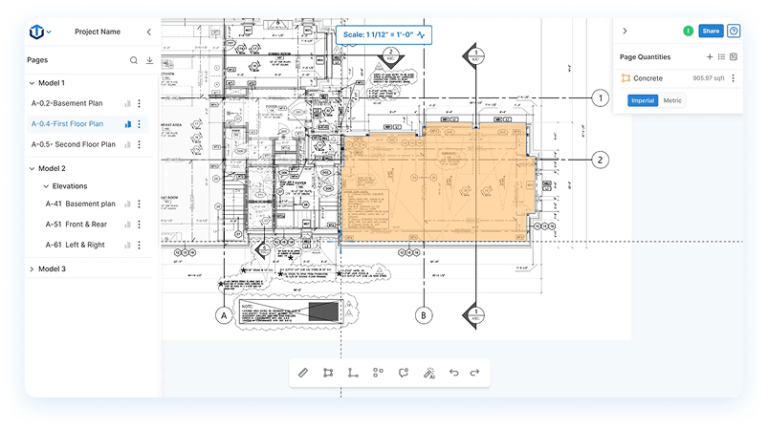

A construction takeoff can look accurate on paper and still miss critical scope. Most takeoff mistakes are not dramatic. They are small gaps that multiply across a project.
Here are the most common breakdown points and how to prevent them.
1. Missing Scope in Detail Drawings
Large plans show the big picture. Detail sheets show the real complexity.
Common misses include:
- Edge conditions
- Transitions between materials
- Parapets and returns
- Flashing or trim elements
- Small add-ons buried in notes
How to avoid it: Always review detail sheets and notes before finalizing quantities. Zoom in. Slow down.
2. Measuring Without Fully Understanding the Scope
Jumping straight into measuring can create blind spots.
If you don’t understand:
- What trade boundaries look like
- What is excluded
- What is included in specifications
You may measure incorrectly.
How to avoid it: Review the full drawing set before starting measurement.
3. Duplicate Measurements
It’s easy to measure the same area twice when:
- Switching between sheets
- Working across revisions
- Measuring similar assemblies
Duplicate quantities inflate totals and distort pricing later.
How to avoid it: Use a structured workflow. Mark completed areas. Work systematically.
4. Incorrect Scale Settings
One wrong scale setting can distort every measurement on a sheet. This is one of the most damaging takeoff errors because it affects everything.
How to avoid it: Verify scale on each sheet before measuring.
5. Not Updating After Drawing Revisions
Drawings change. If quantities are not updated after revisions:
- Scope becomes outdated
- Estimates no longer reflect the latest plans
How to avoid it: Track revision dates and recheck affected sheets.
6. Ignoring Small Quantities
Small line items often feel insignificant. But across a large project, they add up. Missing small items repeatedly creates steady margin loss.
How to avoid it: Treat every measurable component as important.
Final Thoughts
A construction takeoff is only as strong as its process. Most mistakes come from rushing, assumptions, or lack of structure. Accuracy at the measurement stage protects everything that follows.
For a complete walkthrough of the takeoff process, see: How to Do a Construction Takeoff