
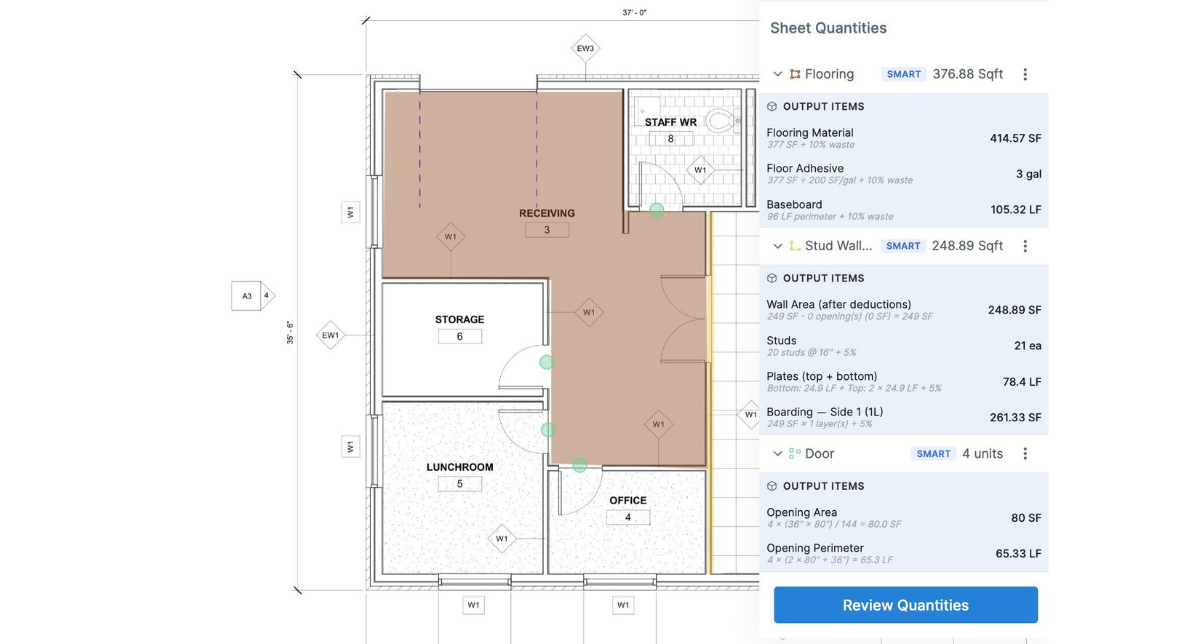

A construction takeoff is the process of measuring quantities from drawings before pricing begins.
It identifies how much material, labour, and work is required for a project.
In simple terms: A takeoff measures the work. It does not price it.
The purpose of a takeoff is to translate drawings into structured quantities that can later be used for estimating and bidding.
Why Construction Takeoffs Matter
Accurate takeoffs are critical because:
- Quantities determine cost
- Scope gaps affect profit
- Missed items lead to disputes
- Over-measuring inflates pricing
If the quantities are wrong, the estimate will be wrong no matter how good the pricing logic is.
What a Construction Takeoff Includes
A takeoff typically measures:
- Areas (square footage)
- Linear dimensions
- Counts of components
- Volumes
- Assemblies
Each trade will measure different elements, but the goal is the same: define scope in measurable terms.
Where Takeoffs Fit in the Construction Process
The workflow typically looks like this:
- Drawings are issued
- A takeoff measures scope
- An estimate applies pricing
- A bid is submitted
The takeoff is the first technical step in pricing a job.
For a full step-by-step guide, see:
👉 How to Do a Construction Takeoff