
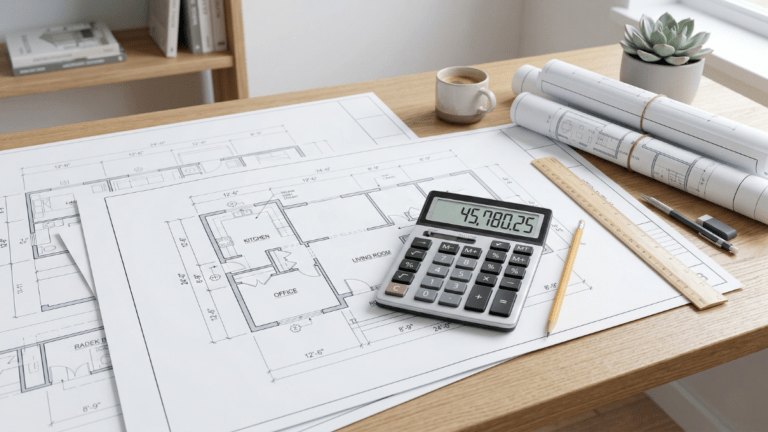

Construction estimating is the process of calculating how much a construction project will cost before work begins.
It turns drawings and scope into a projected cost. In simple terms, construction estimating answers one question: How much will this job cost to build?
For a complete overview of how estimating moves from quantities to final pricing, see: Construction Estimating Explained: From Takeoff to Final Price
The Purpose of Construction Estimating
Construction estimating exists to bring clarity before commitment.
Before a contractor submits a price or signs a contract, they need to understand:
- The full scope of work
- The resources required
- The financial exposure
- The expected return
Estimating provides that clarity. Without estimating, pricing becomes guesswork. With estimating, pricing becomes intentional.
Where Estimating Fits in the Construction Process
Construction estimating sits between design and execution.
The typical flow looks like this:
- Drawings and specifications define the scope.
- Estimating determines the projected cost.
- A bid or proposal is submitted.
- If awarded, the project moves into construction.
Estimating is the financial checkpoint before work begins. Every estimate begins with measured quantities.
If you want to understand how those quantities are created, see: How to Do a Construction Takeoff (Step-by-Step Guide)
Who Performs Construction Estimating?
Construction estimating may be performed by:
- Dedicated estimators
- Contractors and subcontractors
- Project managers
- Business owners
In smaller companies, estimating is often handled directly by the person responsible for delivering the work. Regardless of title, the responsibility is the same: produce a reliable project cost before committing to the job.
Why Construction Estimating Matters
Construction estimating directly impacts:
- Profit margins
- Cash flow planning
- Project viability
- Business sustainability
If costs are underestimated, profit is lost. If costs are overestimated, opportunities may be missed. Strong estimating allows contractors to make informed decisions instead of reactive ones.
To understand how pricing decisions are structured in detail, read: How Contractors Build a Construction Estimate
Manual vs Digital Construction Estimating
Traditional workflows often look like this:
- Manual takeoff
- Quantities written down
- Re-entered into a spreadsheet
- Re-entered again for revisions
That works, but it creates double entry and room for error.
Digital workflows connect quantities directly to pricing. When drawings change, estimates update faster. Tools like TakeCost are built around that connected approach, keeping measuring and pricing in one place.
To see where estimating commonly breaks down, read: Common Construction Estimating Mistakes
Final Thoughts
Construction estimating is the foundation of responsible contracting. Before pricing strategy, before bidding decisions, and before construction begins, estimating defines the numbers that everything else depends on.
Understanding construction estimating is the first step toward building profitable, predictable projects.